Why Are Tank Trailer Tires Wearing Unevenly?
ZW Group| 2026-10-14
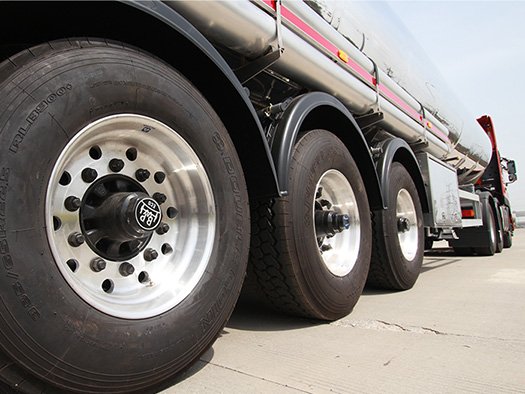
Why are my tank trailer tires wearing unevenly? For fuel tankers, bulk cement trailers, and chemical semi-trailers, irregular tread wear is a common yet expensive operational issue. Due to a high center of gravity, liquid movement (surge) during transit, and strict axle-load distribution rules, tanker tires face unique physical stresses.
If you’re noticing bald shoulders, cupping, feathering, or faster wear on one side of your tanker axles, your tires are signaling a problem beyond normal mileage. Incorrect inflation, axle misalignment, worn suspension components, and uneven load distribution can all contribute to irregular tread wear, increasing operating costs and potentially compromising safety.
The wear pattern is your starting point—not a complete diagnosis. Similar-looking damage can have different causes, and more than one fault may be involved. Before replacing tires or ordering an alignment, establish where the wear occurs, how it compares across the trailer, and whether the affected wheel position has a history of pressure loss or mechanical repairs.
1. Read the Wear Pattern Before Choosing a Repair
Inspect the entire tread circumference, not just the section visible when the trailer stops. Measure tread depth across the inner shoulder, center, and outer shoulder at several positions. Record the wheel location and take clear photographs. A tire worn on one edge tells a different story from several tires showing the same pattern across both axles.
Both Shoulders Are Wearing Faster Than the Center
This pattern often points toward insufficient inflation for the load being carried. The important phrase is “for the load”: a pressure reading is not adequate simply because it matches what someone normally uses. Overloading can produce a similar operating condition, even when the tire has not lost air.
Check cold pressure against the tire manufacturer’s load-and-inflation guidance and the trailer’s requirements. Also inspect for leaks. Repeatedly adding air without finding a leaking valve, damaged wheel, puncture, or other source leaves the cause unresolved.
The Center Is Wearing Faster Than the Shoulders
Center wear can be associated with inflation that is excessive for the actual load, although tread design and service conditions also matter. It is not a reason to lower pressure by guesswork. Verify loaded axle weights and the approved pressure guidance before making changes. A trailer that alternates between light and heavy freight still needs a pressure policy that safely supports its operating loads.
One Shoulder Is Worn, or the Tread Feels Feathered
One-sided wear raises questions about axle alignment, wheel geometry, suspension movement, and loading. Feathering—a sawtooth feel across tread ribs—often indicates lateral scrubbing. On a trailer, that may involve an axle not tracking correctly or tandem axles that are not parallel.
Do not assume that every worn inner shoulder means a simple alignment adjustment. A bent component, loose bearing, worn bushing, or shifted suspension mounting can change wheel behavior. Those faults need attention before alignment measurements become useful.
Cupping, Scalloping, or Isolated Flat Spots Appear
Alternating depressions around the tread can be associated with poor wheel control, wheel-end looseness, assembly runout, or balance issues. Inspect shocks where fitted, suspension components, bearings, and the tire-and-wheel assembly rather than treating cupping as proof of one failed part.
A localized flat spot calls for a different investigation. Brake lockup, dragging brakes, or a skid event may be involved. Multiple flat spots or an unusual wear pattern should prompt a qualified brake and wheel-end inspection.
2. Inflation Problems Are Often Hidden in Routine Operations
Use a reliable gauge and check tires cold, following the manufacturer’s definition of a cold reading. Pressure rises during operation, so a warm measurement cannot be treated as a cold baseline. Do not bleed a hot tire down to its cold target; it may become underinflated after cooling.
There is no universal correct pressure for every semi trailer tire. Tire size, load range, single or dual fitment, actual loading, and manufacturer guidance all affect the decision. The sidewall marking is not, by itself, a complete fleet inflation policy.
Dual assemblies deserve particular attention. An inner tire can be overlooked because access is awkward. If one tire runs low, its mate may carry more load, and the resulting damage may not remain confined to the leaking tire. Check both tires individually, including valve extensions and accessible connection points.
Automatic tire inflation systems and tire pressure monitoring systems can help identify or manage pressure problems, but they serve different functions. Neither replaces inspection. A recurring system warning or frequent air replenishment should trigger a leak investigation, not become accepted as normal behavior.
3. Check Suspension Condition Before Paying for Alignment
A trailer can track poorly because its axles are misaligned, but it can also move out of position under load because suspension components are worn. Aligning a trailer with loose bushings or damaged locating components may produce acceptable readings in the workshop without correcting what happens on the road.
For air-ride trailers, ride height should be checked against the suspension manufacturer’s specification. Incorrect ride height can affect suspension geometry and load sharing. For mechanical suspensions, spring condition, equalizers, hangers, and related hardware need inspection. Wheel-bearing condition and wheel-end play also belong in the assessment.
A useful alignment inspection considers the trailer’s reference geometry, axle tracking, and the relationship between tandem axles—not merely whether the wheels appear straight. If wheel geometry is outside specification, the technician must determine whether adjustment is possible or whether damage requires repair.
Tell the service provider about recent curb strikes, pothole impacts, suspension work, or a change in how the trailer follows the tractor. These details can direct the inspection toward damage that a tire replacement alone would miss.
4. Load Placement and Tight Turns Change the Picture
Acceptable total vehicle weight does not prove that every tire is correctly loaded. Freight concentrated toward one side or one end can create uneven loading. Axle weights help establish the overall picture; wheel-position weights, where available, provide better insight into side-to-side differences.
Consider the actual duty cycle, too. A spread-axle trailer maneuvering through tight yards experiences different tire scrubbing from a trailer spending most of its time on straight highway routes. Fixed axles cannot all follow the same turning path without some lateral scrub.
That does not make severe shoulder loss harmless. It means the diagnosis should distinguish operational scrub from a mechanical fault. If comparable trailers on the same work show similar wear, application and tire selection deserve attention. If one trailer suddenly becomes an outlier, inspect its pressure, loading, and running gear before blaming the route.
5. Mismatched Duals and Brake Faults Can Keep the Problem Alive
Two tires marked with the same nominal size are not necessarily a suitable dual pair. Different tread depths, constructions, or products may have different rolling dimensions. Excessive mismatch can cause unequal load sharing and scrubbing. Follow the tire manufacturer’s limits for dual matching, spacing, and compatibility rather than using appearance alone.
This matters when replacing only one tire in a worn pair. The remaining tire should be checked before a new or replacement tire is fitted alongside it. Retreaded tires should be assessed under the same matching principles; retreading alone does not explain irregular wear.
Brake drag and wheel-end faults may create unusual heat as well as tread damage. A wheel position that repeatedly runs hotter than comparable positions deserves investigation. Temperature differences are clues, not diagnoses: braking activity, sunlight, and measurement conditions affect readings. Do not touch hot components or work beneath an unsecured trailer.
6. Use a Practical Inspection Sequence
The most efficient approach separates immediate safety concerns from checks that require workshop equipment:
Check for damage requiring removal from service: Exposed cords, bulges, suspected separation, rapid pressure loss, or severe localized damage warrant professional assessment before continued operation. Verify tread condition against applicable requirements.
Record the pattern: Note wheel position, tread depths, cold pressures, tire specifications, and whether the problem affects one tire, one axle, or the whole trailer.
Verify the load and pressure relationship: Use actual operating weights where available and the relevant manufacturer guidance. Check dual matching and investigate leaks.
Have the running gear inspected: Repair suspension, wheel-end, or brake faults before final alignment. Structural concerns need qualified evaluation.
Follow up after the repair: Recheck pressure and track tread-depth changes at consistent locations. Existing irregular wear will not disappear, so judge whether abnormal wear continues to develop.
A tire that has run seriously underinflated may require removal and internal inspection even if it looks acceptable after reinflation. Likewise, replacing a visibly damaged tire does not establish that the wheel position is safe; the cause still needs to be resolved.
Replace the Tire, Correct the Cause, or Both?
Replacement and diagnosis are separate decisions. A damaged or unserviceable tire needs appropriate action regardless of the repair schedule. But fitting new rubber without correcting pressure loss, axle tracking, or suspension movement can repeat the same expense.
Rotation may help manage certain wear patterns when permitted by the tire manufacturer and fleet procedures. It does not repair misalignment or reverse structural damage. Moving tires without documenting their original positions can also erase useful diagnostic evidence.
For the next service visit, bring the pressure readings, tread measurements, load information, and repair history. Ask the technician to identify the likely cause and record the checks performed, not simply recommend replacement. The useful outcome is a serviceable tire assembly on a sound wheel position—and a follow-up record showing that the abnormal wear has slowed or stopped.